
The complete guide
A Buyer's Guide to the Giant Tumble Tower
A simple way to get people playing together
Finding an activity for a gathering can be harder than planning the food. Some games take too long to explain. Others need a screen, a large team or a table full of small pieces. A giant tumble tower gives a small group something visible and hands-on to do.
The idea is easy to follow. Build a tower, remove a block and place it on top. Then watch the next player decide which piece to try. As gaps appear lower down, each move becomes a little less certain.
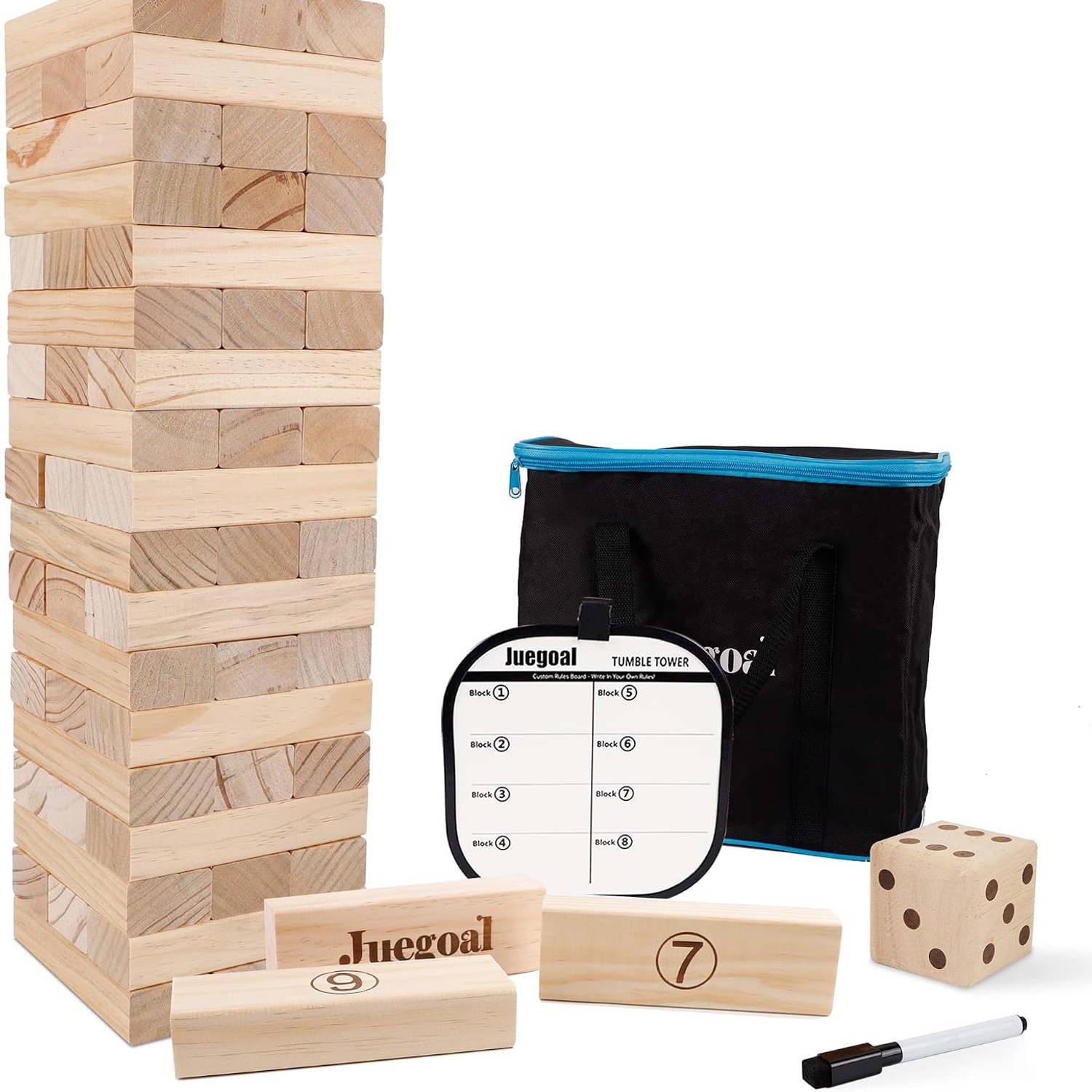
This set has 54 wooden blocks, a dice and a carry bag. It is listed for two to four players aged six and up. Before buying, it helps to understand its size, weight and space needs, along with what the supplied measurements do and do not tell you.
How the stacking game works
The usual starting layout uses three blocks per row. Each new row runs across the one beneath it, so the finished tower has alternating layers. With all 54 blocks in place, you have 18 rows ready for play.
Players take turns removing a block and setting it on the top. Moving pieces changes the tower's balance. A block that looked easy to slide out a moment ago may become harder to move after another player changes the structure.
Eventually, someone makes the move that brings it down. That fall ends the round, and the blocks can be stacked again. The basic format is straightforward enough to explain while setting up, which helps when guests have not played before.
A printed rulebook is not listed as included. Decide on your group's rules before starting, especially how you will handle the top layers and what counts as a completed turn.
What is included in this set
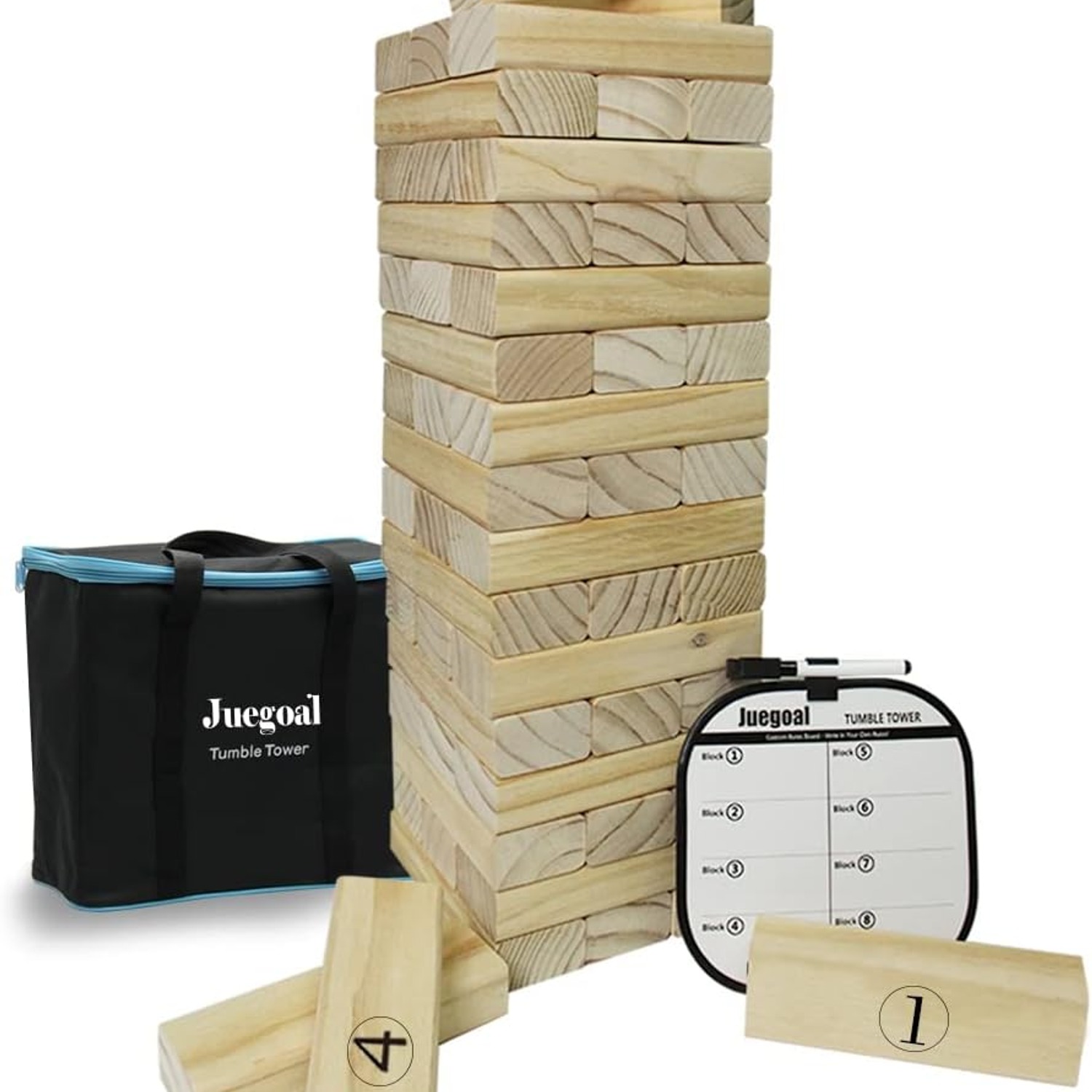
The set contains 54 blocks described as pine wood. Six are marked, and there is one dice for optional variations. A black canvas bag with handles is also included to hold the pieces between games.
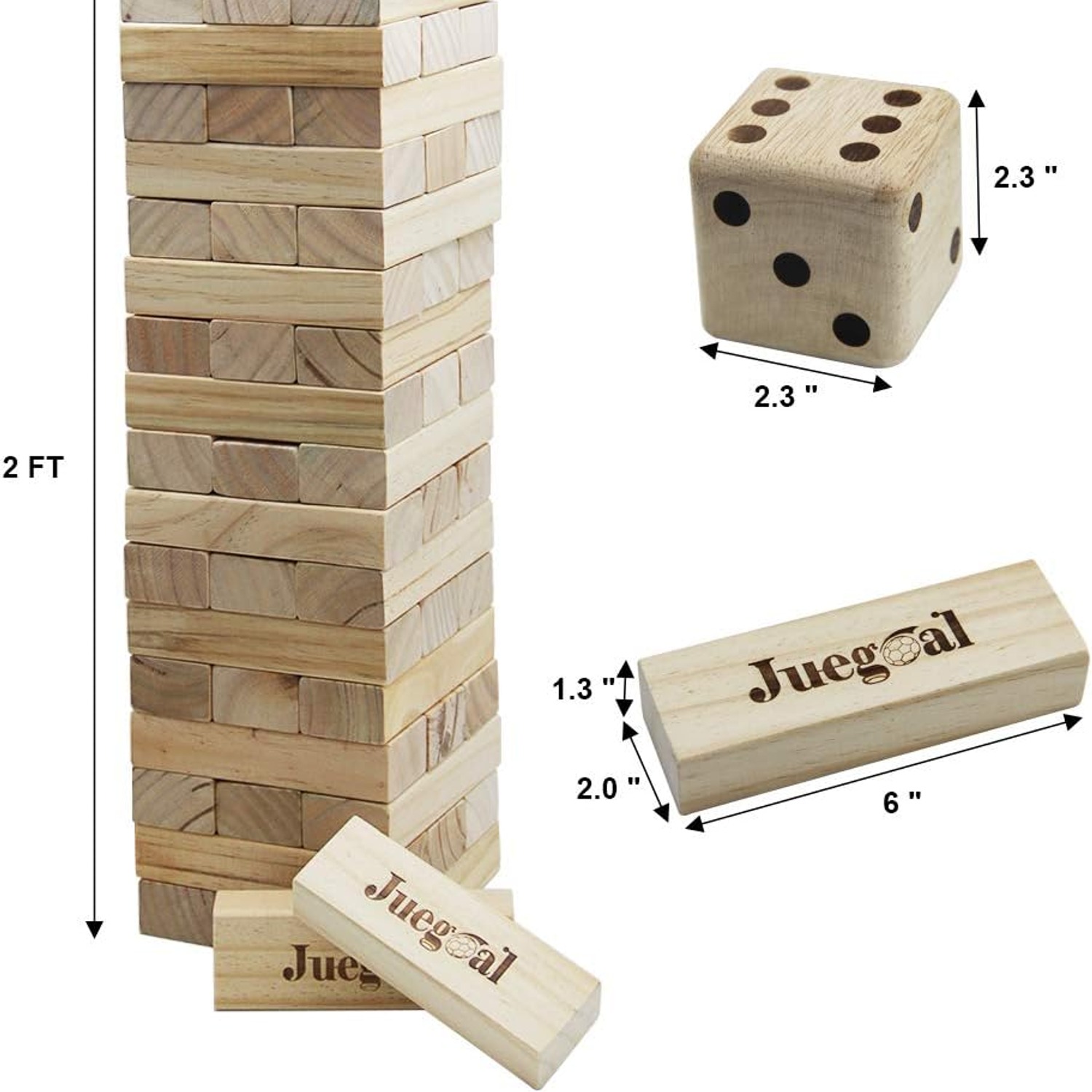
Each block is listed as 6 x 2 x 1.3 inches. The dice measures 2.3 inches on each side. These measurements matter because this is a large tower game, not a small desk version that can be tucked into any spare corner.
No assembly is required in the sense of joining parts or using tools. Setting up still takes some time, as you need to arrange the blocks before every round. Packing away also means collecting all the pieces, checking the area and returning them to the bag.
If you are buying for an event, allow time for both tasks rather than counting only the playing time.
Making sense of the size information
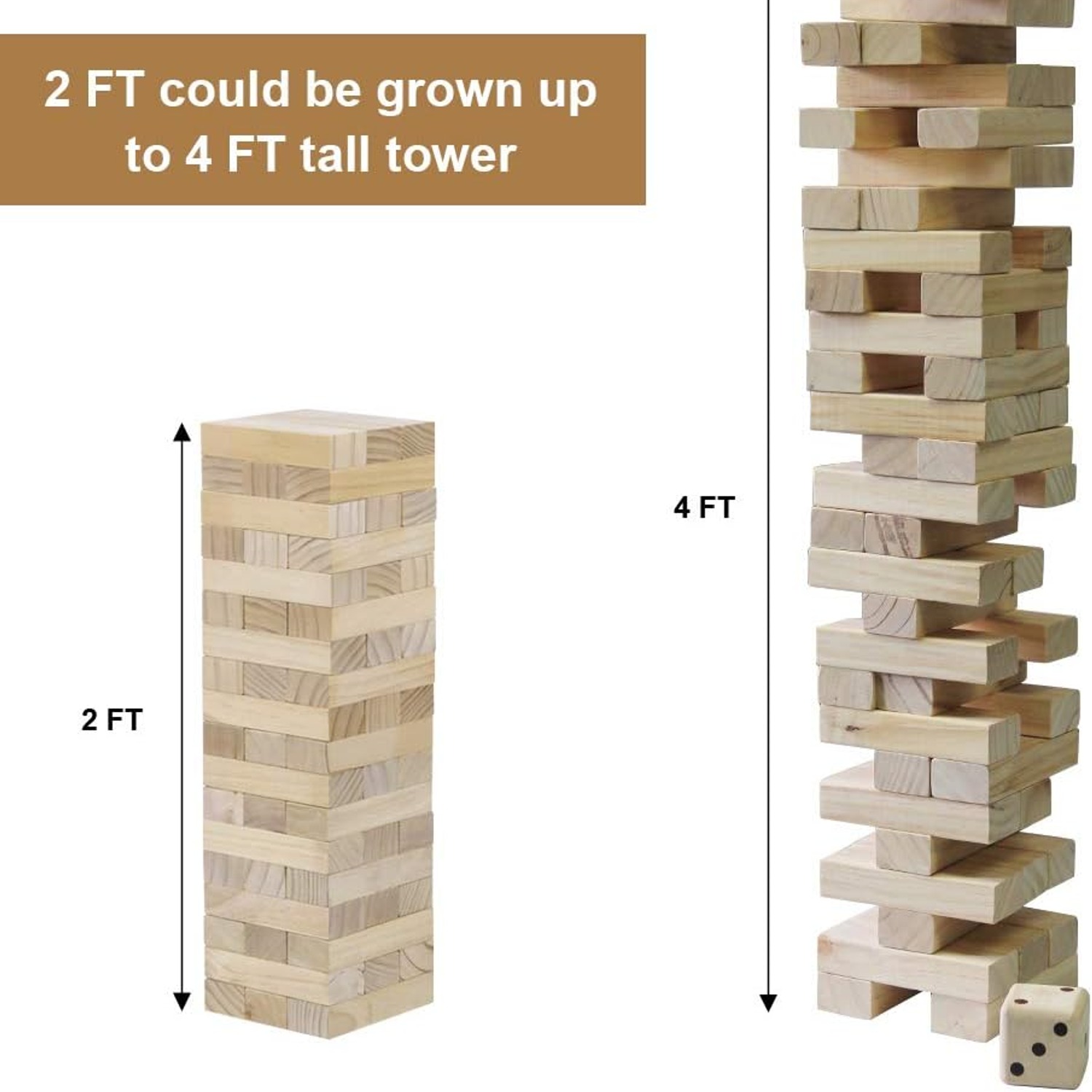
The supplied description gives a starting tower size of 6 x 6 x 23.5 inches. It also calls the set a 2 FT model. Those figures describe a tower that begins at roughly two feet tall.
The description says it can grow to as much as four feet during play. Treat that as a possible result, not an expected height for every round. Some towers will fall much sooner, depending on the moves made.
There are also separate recorded dimensions of 22.9 x 10.2 x 20.3 cm and an additional 59.7 x 15.2 cm entry. The maker does not explain exactly what each measurement covers. Do not assume the smallest figures describe the assembled tower or the packed bag.
For a tight storage cupboard or a fixed playing area, ask for confirmation of the measurement you need. The starting tower size alone does not account for space around it when blocks fall.
Choosing a safe place to play
A wooden balance game needs a stable base. Pick a firm, level surface and leave clear room on all sides. An uneven patch of ground can make the tower lean before anyone takes a turn.
Think about where the pieces will land, not just where the tower will stand. Move drinks, phones and breakable objects away from the playing area. Keep feet clear of the base, and do not try to catch a falling tower.
For indoor use, consider the surface beneath the game. Large wooden pieces can fall with some force, so choose a location where that will not create an avoidable problem.
Outdoor play is described by the maker, but weather resistance is not. A dry patio or another sheltered, level area is a more sensible choice than wet grass. Bring the blocks inside after the game rather than leaving them out overnight.
Who this family stacking game suits
The listed player count is two to four. That makes the set a practical option for a small family group or a few friends who want to share an activity without forming teams.
For a larger party, people can watch and join later rounds. Just make the order clear so guests know when they will get a turn. This is easier than trying to stretch one tower across a crowd of players at once.
The recommended age is six years and up. A separate scraped field says Baby, but that conflicts with the manufacturer's age recommendation. It should not be used as a reason to give this set to an infant.
Adults should supervise younger players and keep other children away from the fall area. The simple rules do not remove the need for care around large falling blocks.
Using the marked blocks and dice
The six marked blocks and included dice give your group a way to change the game. There is no complete fixed rule system supplied in the maker's description, so treat these as tools for house rules.
Start with the standard remove-and-stack version. This gives everyone time to understand how the tower behaves before adding extra decisions. Once the group is comfortable, agree on a variation and explain it before the next round begins.
You might use the dice to choose between rules your group has written down. Keep any variation clear and reasonable for the players taking part. Avoid introducing surprise rules midway through a turn.
A tower game with dice should still feel easy to follow. If the extra rules cause confusion or arguments, set the dice aside and return to ordinary turns.
Taking the game to gatherings
The included bag helps keep the set together, which is useful for a family gathering game that moves between homes. It also makes it easier to check that the blocks and dice are packed before leaving.
Still, portable does not mean lightweight. The listed set weight is 6.02 kg. Think about the distance from your car to the playing area, especially if you are also carrying food, chairs or other supplies.
Before choosing it as a picnic party game, check the venue. A place with plenty of open grass may still lack a suitable level surface. It is better to settle that detail ahead of time than arrive with a bag of blocks and nowhere steady to stack them.
After play, count the blocks before packing. Missing pieces change the starting tower and can be easy to overlook in a busy outdoor setting.
Caring for the wooden pieces
Keep care simple. Wipe the blocks with a soft, dry cloth after use, especially if they have been on the ground. Avoid soaking them or packing them away while damp.
Store the set indoors in a dry place. The carry bag is useful for keeping pieces together, but it should not be treated as proof against rain or moisture. No weatherproof finish is specified.
Check the blocks before each session. If a piece has developed damage or a rough area, stop and assess it before allowing further play. Check the bag and handles too, particularly before carrying the full set.
The finish and any special cleaning treatment are not detailed in the maker's description. Avoid assuming that a household cleaner or wood treatment is suitable without checking further guidance.
Choosing it as a gift
Giant blocks with a carry bag can be a thoughtful gift for someone who likes group activities. The important question is whether the recipient has the right space and wants a game of this size.
Consider their storage room, the ages of likely players and whether carrying 6.02 kg will be comfortable. A larger game can be enjoyable at gatherings but less convenient in a home with little clear floor space.
If you need it for a birthday, check delivery information before ordering. Warranty details and our return conditions are also not specified, so review those policies rather than assuming a particular promise applies.
The short version
The giant wooden tower game offers 54 pine blocks, six marked pieces, a dice and a carry bag. It is listed for two to four players aged six and up, with indoor and outdoor use described.
Choose it if you have a dry, level playing area and want a hands-on game for a small group. Check any space-critical measurements before buying, allow room for falling pieces and keep the rules clear. The appeal is in the shared decisions, the changing balance and the chance to build it all again.