
The complete guide
Choosing an Inflatable Ice Serving Bar for Your Next Gathering
A busy party table can become awkward fast. Drinks sit in different places, guests keep asking where to find them, and the host spends more time fetching refreshments than talking. A shared ice station gives everything a clear home.
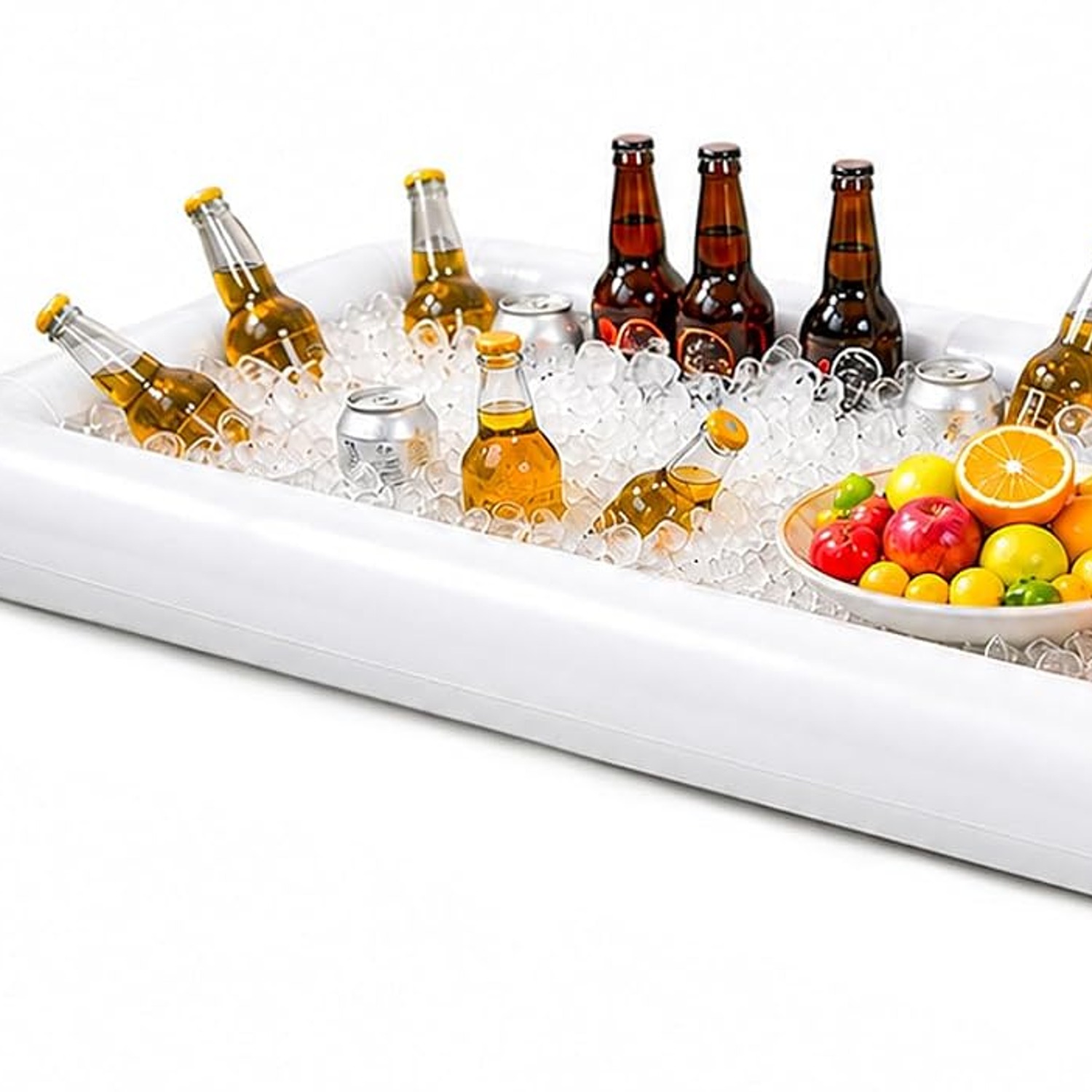
An inflatable serving bar offers that kind of setup without leaving you with a rigid tub to store afterwards. Add air, set it on a suitable surface and fill it with ice around the refreshments. When the event is over, empty it, clean it and let it dry before packing it flat.
This model includes a corner drain plug and has a recorded empty weight of 0.28 kg. There is one important buying check, though. Its description contains conflicting measurements, so confirm the inflated size and load limit before planning your table around it.
What an inflatable serving bar actually does
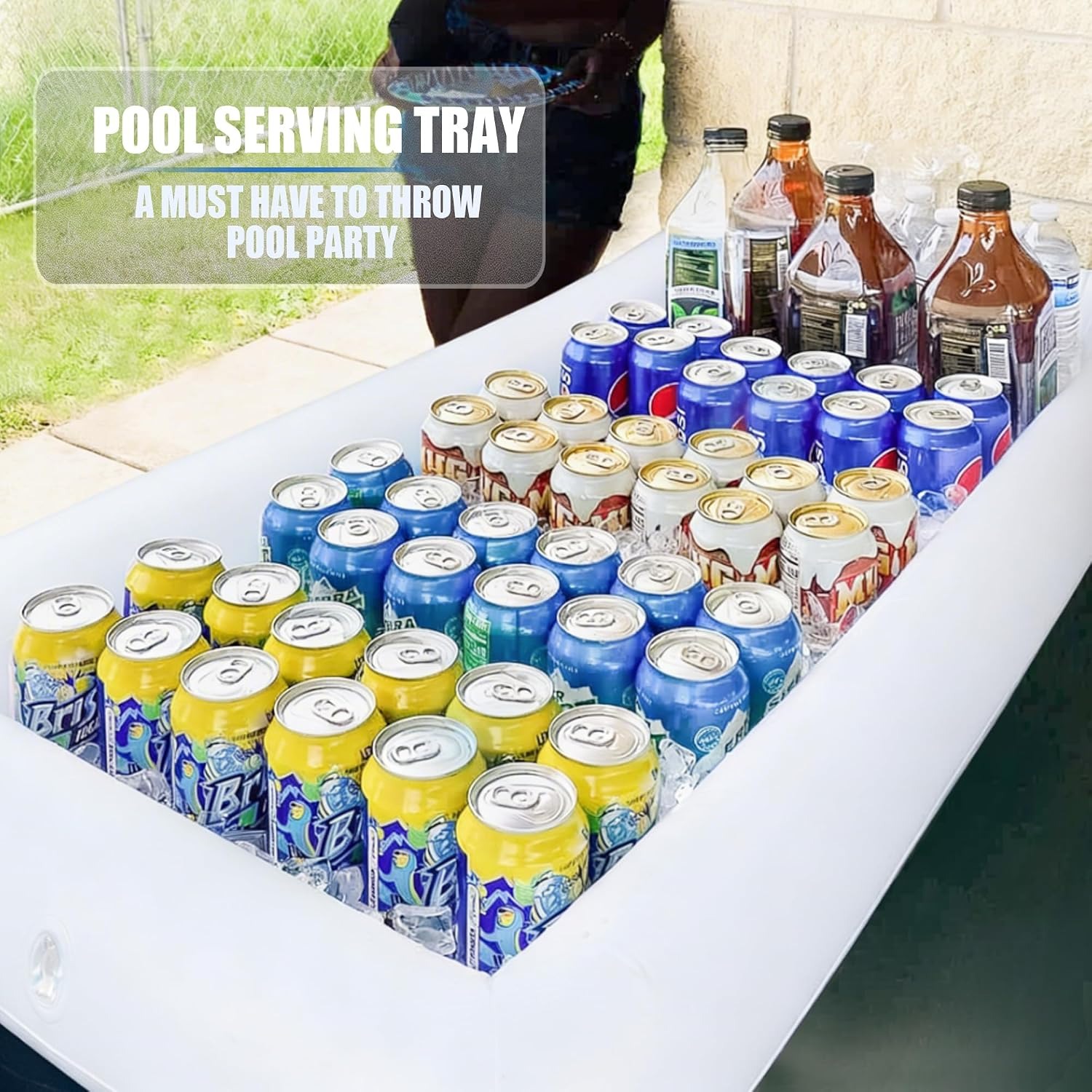
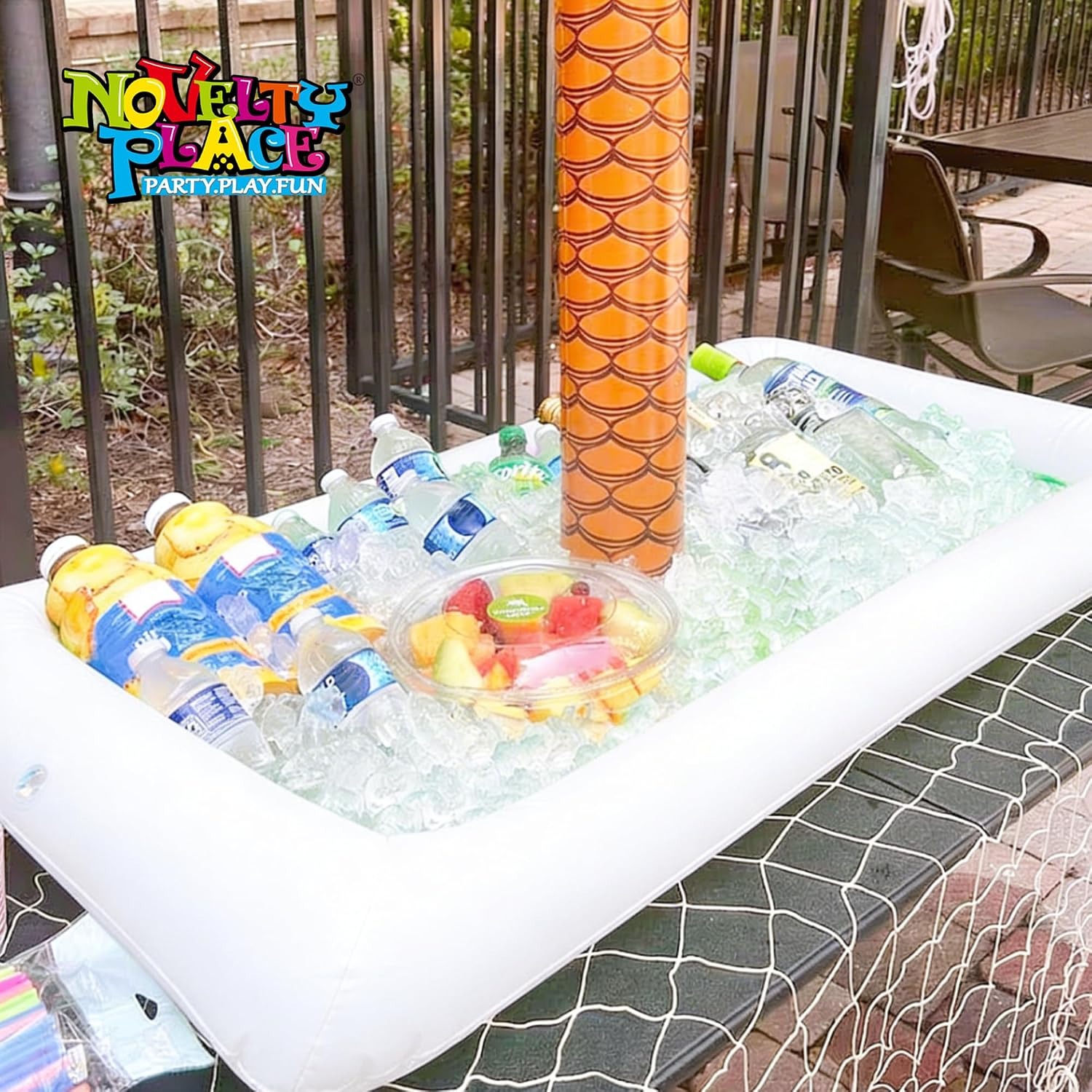
Think of this as an open serving tray that uses ice for cooling. It gives drinks and suitable snack containers a shared place on the table. Guests can see what is available without opening a lid or searching through a separate storage cooler.
It does not make cold air or replace refrigeration. Ice melts, especially in warm weather, and an open tray needs attention during use. Start with chilled drinks where possible, check the ice regularly and refresh it as needed.
An ice buffet cooler is most useful during the serving part of a gathering. Keep reserve supplies somewhere appropriate and bring out manageable batches rather than assuming the tray can hold everything at once.
How the setup works
Choose the location before adding air or ice. You need a level surface that supports the whole base, with enough room for guests to reach the drinks without leaning across other food. The surface should also tolerate the odd splash.
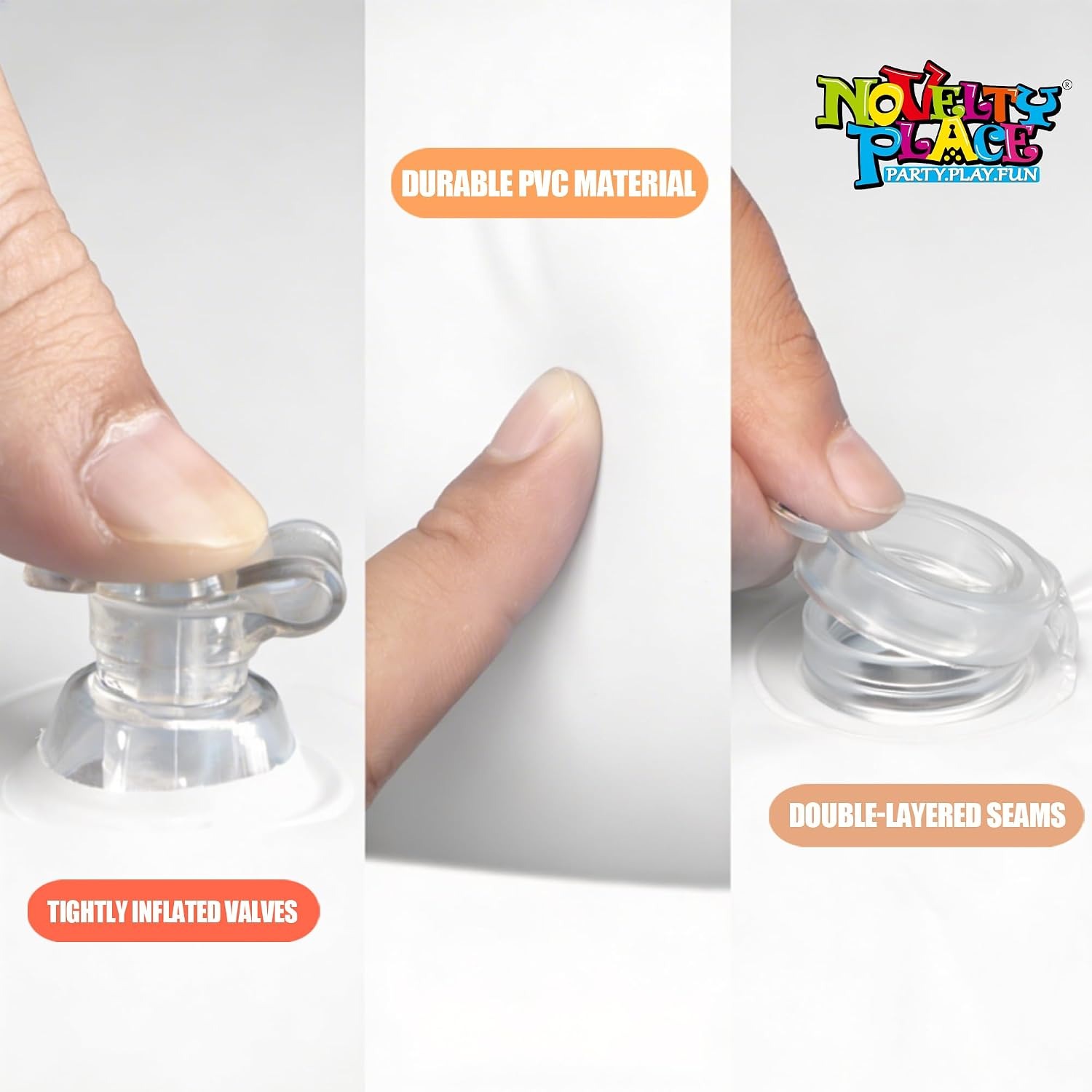
The maker describes inflation with an air pump or by mouth. It does not confirm that a pump is included. Follow any supplied inflation directions, and check the body and drain closure before filling.
Arrange the contents so they remain easy to reach. Keep food in suitable containers and avoid sharp packaging edges against the inflatable walls. Do not move a filled tray just to improve its position. Empty it first, then reset it where needed.
Check the size before you choose
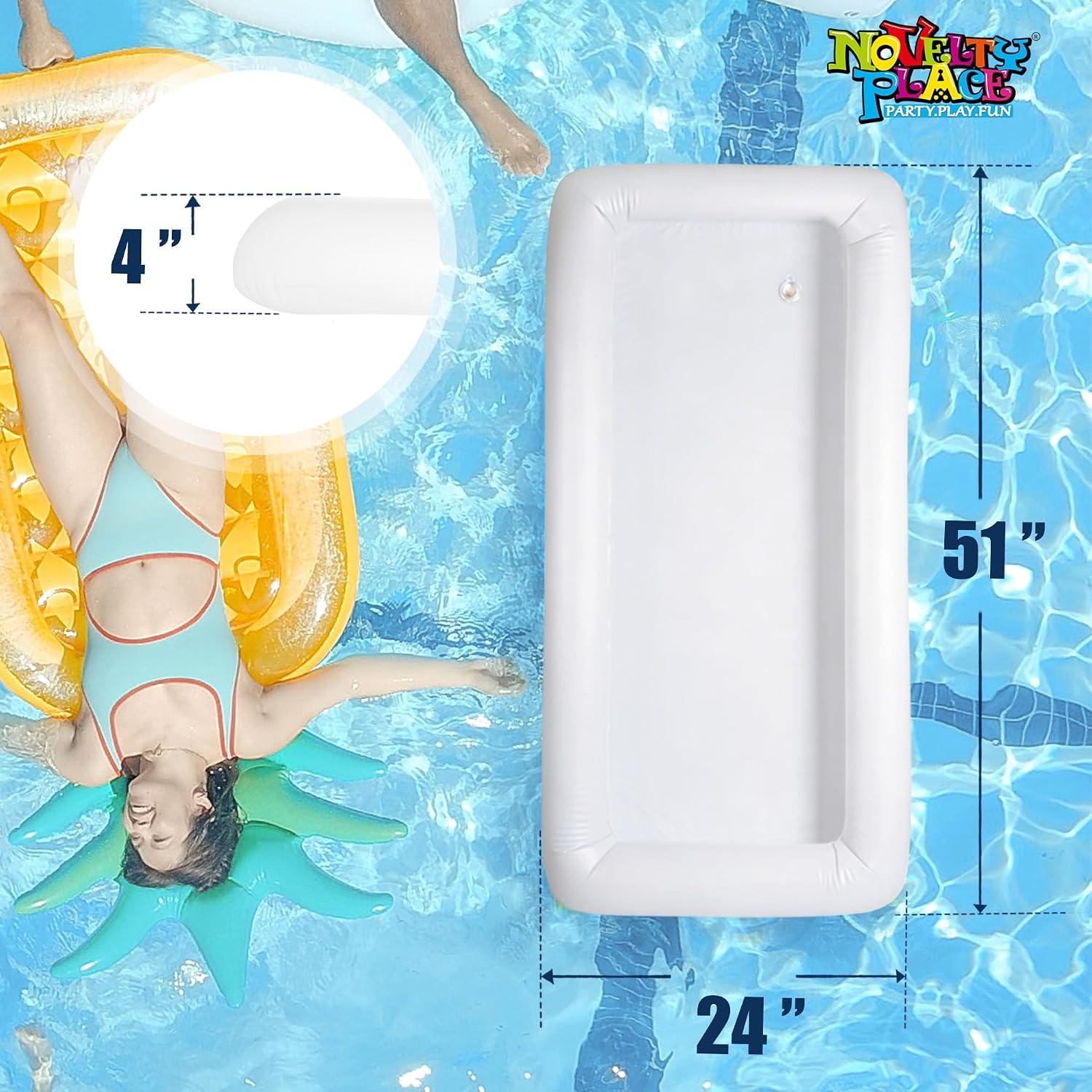
The main question here is fit. Product details give dimensions of 22.9 x 15.2 x 8.9 cm, while the descriptive copy refers to roughly 50 to 51 inches long, 24 inches wide and 4 inches deep. Those figures do not describe the same footprint.
The maker does not establish which measurement is the correct inflated size. Do not assume the smaller figure is a packed size or that the larger figure is guaranteed. Ask for confirmation if you need it to fit a particular table.
Measure the available tabletop, not just its overall length. Leave space for cups, food, guests' hands and access to the drain. A drinks cooler tray that fits edge to edge may still make serving difficult if nothing else has room.
Capacity needs a separate check
Size and load capacity are different questions. Even a roomy tray needs a suitable support surface, and the weight of water and ice adds up before drinks are included.
The product details list a maximum weight recommendation of 453.59 g. That needs clarification against the wider serving claims in the maker's description. There is no dependable can count or usable filled capacity established here.
If you are buying for a set number of guests, ask about the intended load limit before ordering. Plan a separate place for reserve drinks. It is better to refill a modest serving station than build your whole event around an unconfirmed capacity.
Who this style of tray may suit
A portable serving bar may appeal to people who host occasional birthdays, family lunches or relaxed outdoor gatherings. Its main storage benefit is simple. Once empty and dry, it deflates rather than taking up the space of a rigid tub.
Picnics and camping are listed uses too. For those outings, consider the whole setup, not just the tray. You still need to transport ice, keep supplies cold before serving and find a stable surface at your destination.
It is less suitable if you need a closed cooler for travel, a guaranteed cooling period or a confirmed heavy-duty capacity. Those needs call for specifications the maker's description does not provide. Choose around the job you need done, rather than the look of the party photos.
Planning a useful drinks station
Put the station somewhere easy to find but clear of the busiest walkway. A queue around a narrow doorway can make even a small gathering feel cramped. Leave room for someone to choose a drink while another person passes.
For a barbecue drink station, keep a clear gap from grills and hot equipment. Heat is unhelpful for the ice and can damage an inflatable product. Watch for hot serving tools being set down beside it as well.
Place spare cups nearby on a dry surface. Keep a cloth within reach for splashes, and decide who will check the ice during the event. These small choices matter more than adding extra decorations around the tray.
Using it with food
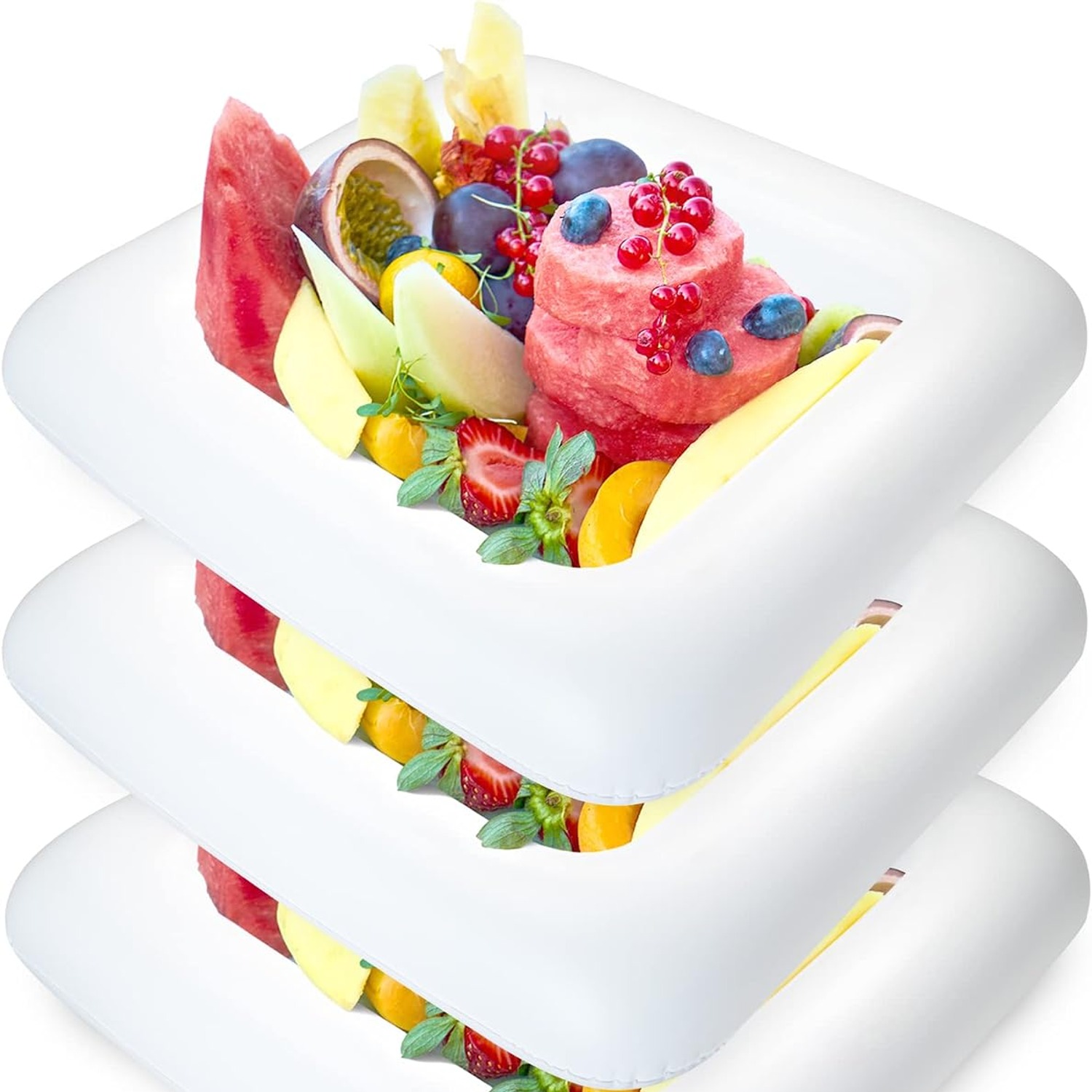
The maker describes serving food and drinks, but it does not provide a food-contact certification. Use appropriate bowls or containers for unpackaged snacks rather than placing them directly against the tray.
Keep meltwater out of food containers. Choose containers that sit steadily, and avoid filling them so high that they become easy to tip when guests serve themselves. Check their position again as the ice shifts and melts.
An inflatable buffet cooler is not proof that food is being held at a safe temperature. Follow local cold-food guidance and use a food thermometer where needed. If you cannot monitor perishable food properly, use the station for drinks and keep that food refrigerated until serving.
Handling meltwater without a mess
The corner drain plug is a useful feature, but it still needs a plan. Before filling, work out where the water will go and whether you can reach the outlet without disturbing the table.
Use a suitable container to catch meltwater. Keep electrical items and anything that could be damaged by water away from the drainage area. Open the plug carefully and watch the flow rather than leaving it unattended.
Avoid dragging or carrying the loaded tray to a sink. Remove refreshments and reduce the contents before making any adjustment. After draining, check the closure before adding fresh ice. An ice tray with drain plug is easier to manage when access stays clear from the start.
Outdoor and poolside use
Shade is a practical choice for an outdoor party cooler. Direct sun adds heat to an open ice station, so a sheltered table can reduce the amount of attention it needs. It will still need regular checks.
Keep it away from rough ground, sharp edges and places where people may trip over it. A picnic drinks tray works best as part of a planned serving area, not squeezed into whatever space remains.
The maker also describes floating use. However, a tested floating load is not given by the maker. Do not treat the tray as a pool toy or flotation aid. If controlled serving matters most, a stable table beside the gathering is the clearer choice.
Cleaning and storing it between events
After use, remove all food containers, drinks and remaining ice. Drain the water before handling the tray for cleaning. The listed care method is to wipe it with a damp cloth.
It is not dishwasher safe or oven safe. Avoid abrasive cleaning tools, sharp objects and heat. If more detailed cleaning directions arrive with the product, follow those rather than guessing which stronger cleaners might be suitable.
Let it dry fully before folding. Trapped moisture makes storage less pleasant and means another cleaning job before the next gathering. Store the deflated tray in a clean, dry place where other items will not puncture it.
Before reuse, check the body and drain plug. A reusable ice serving bar still needs a quick inspection each time, especially after being packed with other party supplies.
The short version
This inflatable ice serving bar offers an open refreshment station, a corner drain and flat storage after use. It may suit occasional entertaining where portability and storage space matter.
Confirm the inflated dimensions and intended load limit before buying. Then plan a supported serving surface, enough ice and a safe place for meltwater. With those basics settled, you can decide whether this tray fits your gathering or whether a different cooler would serve you better.